Offshore Erleben
2 TenneT 190724 Einzug Erdkabel Groven-Deich Buesum-7483
Cable laying on land

Underground cable

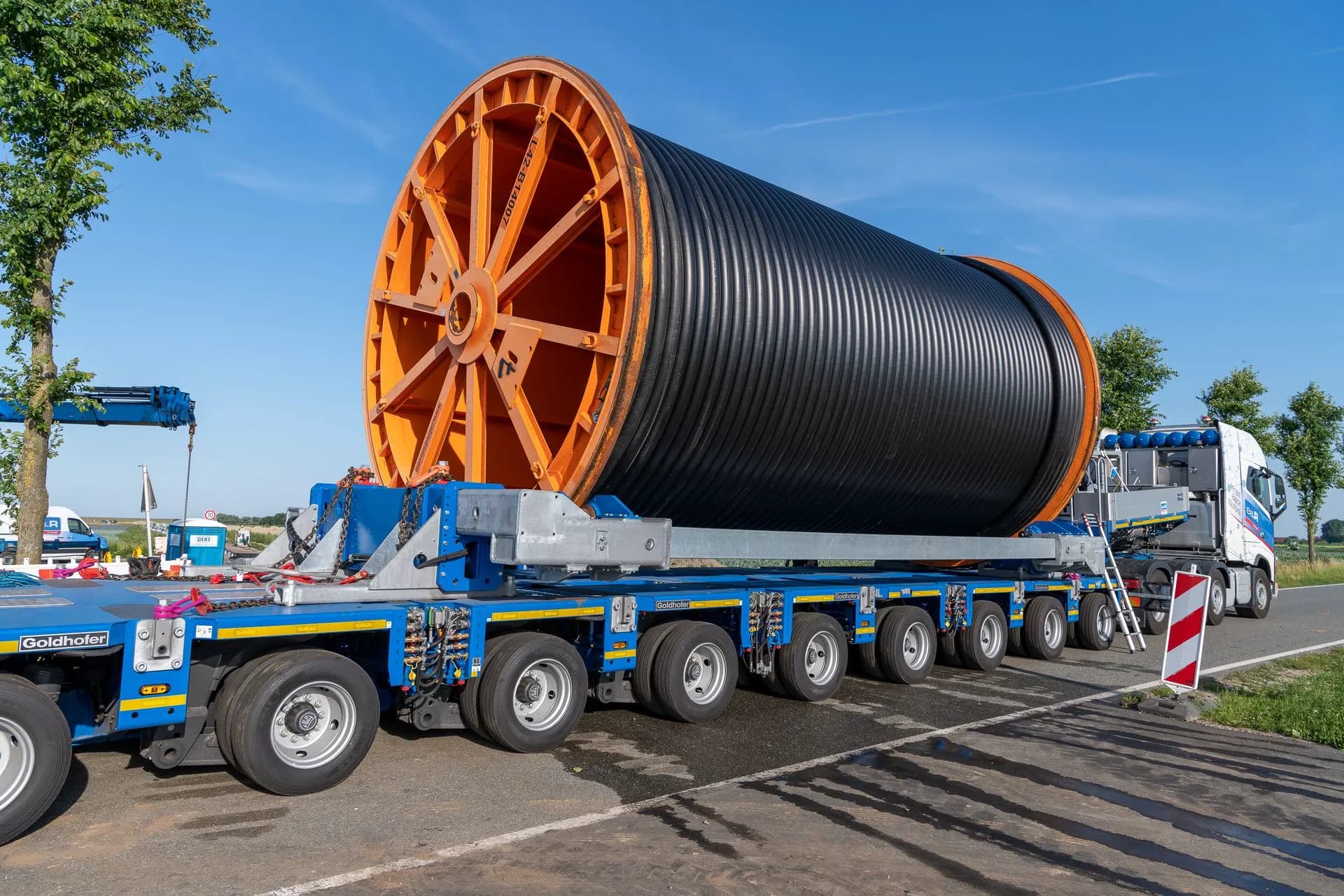
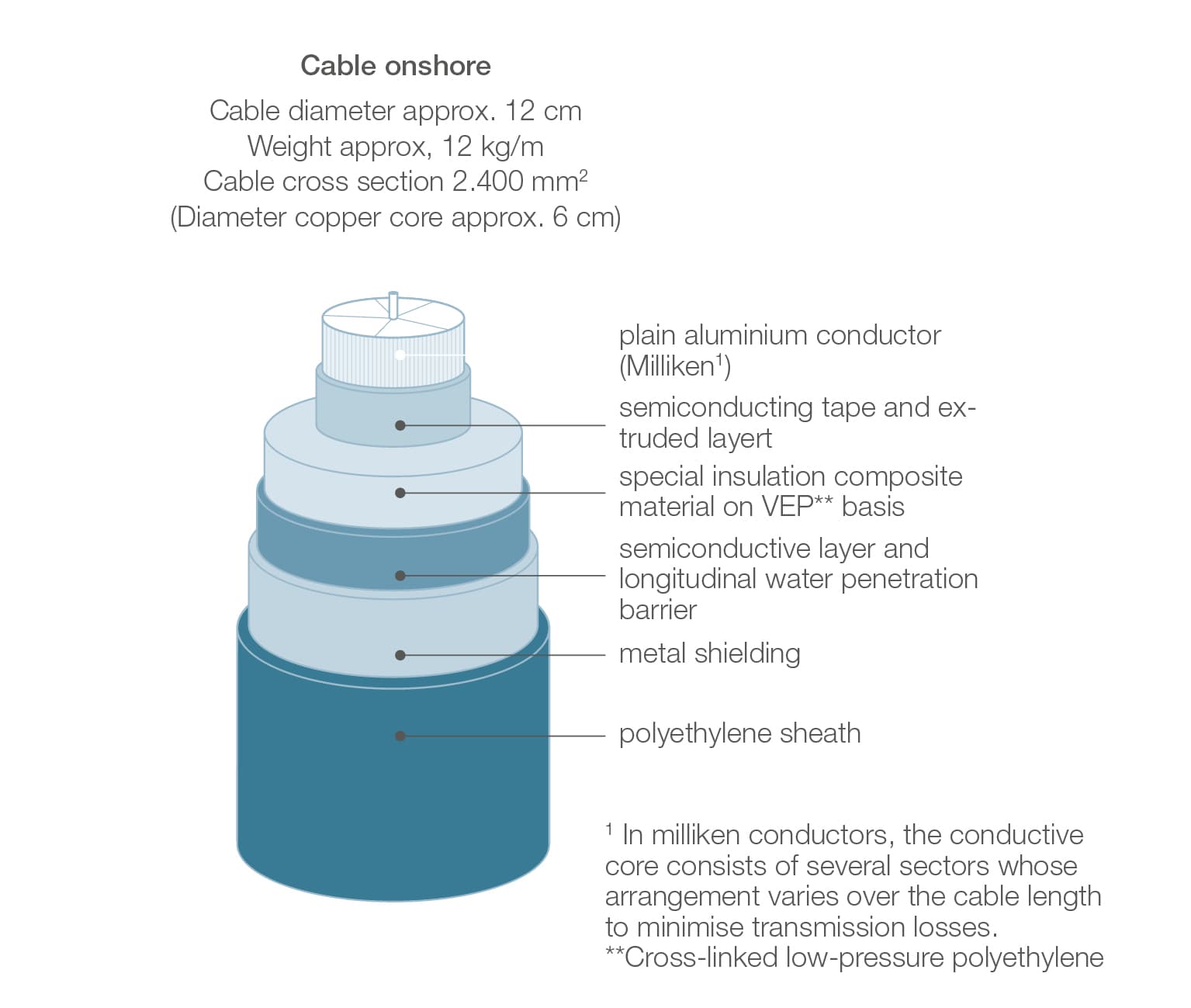
The underground cable contains an aluminum conductor for easier transport. However, the cables for future 2GW projects will use copper as the conductor due to its even better conductivity. On land, the cable is laid in individual sections of approximately 750 to 2,000 meters, depending on the size of the cable drum on which the cable section is delivered. The cable sections are then connected with joints. You can find out how the cable is laid on land in the flyer.

Fact check: Land cables

Fact: A land cable has a diameter of up to 13 centimeters.
  • Service life: approx. 40 years
  • DC land cable diameter: between 11 and 13 centimeters
  • AC land cable diameter: between 7.5 and 10 centimeters
  • DC land cable weight: between 12 and 17 kilograms per meter
  • AC land cable weight: between 7 and 8 kilograms per meter
Time-lapse: Laying a cable on land in just a few seconds

We use two techniques for laying underground cables: The standard method is open trench construction. This usually involves opening up the ground and digging a trench in which the cables are laid. To protect sensitive ecosystems and to cross certain roads, dikes, waters, or railway lines, the cables are laid underground without trenches using horizontal directional drilling (HDD). This technique is extremely environmentally friendly and gentle, as it keeps earthworks to a minimum. Underground drilling of obstacles using the HDD method is usually possible over a length of up to 1,000 meters.

Electromagnetic fields

Electromagnetic fields are generated wherever electricity flows. Even in underground cable systems, voltage differences create an electric field. The cable's insulating layers shield this field so that it cannot escape to the outside. The structure of the cables with their insulating layers also ensures that the resulting magnetic fields are minimal and have no negative impact on the environment.